

Ceramic window tint and the Adelaide climate
South Australian VLT limits, what nano-ceramic film does that dyed film cannot, and honest pricing by vehicle type.
· 8 min read
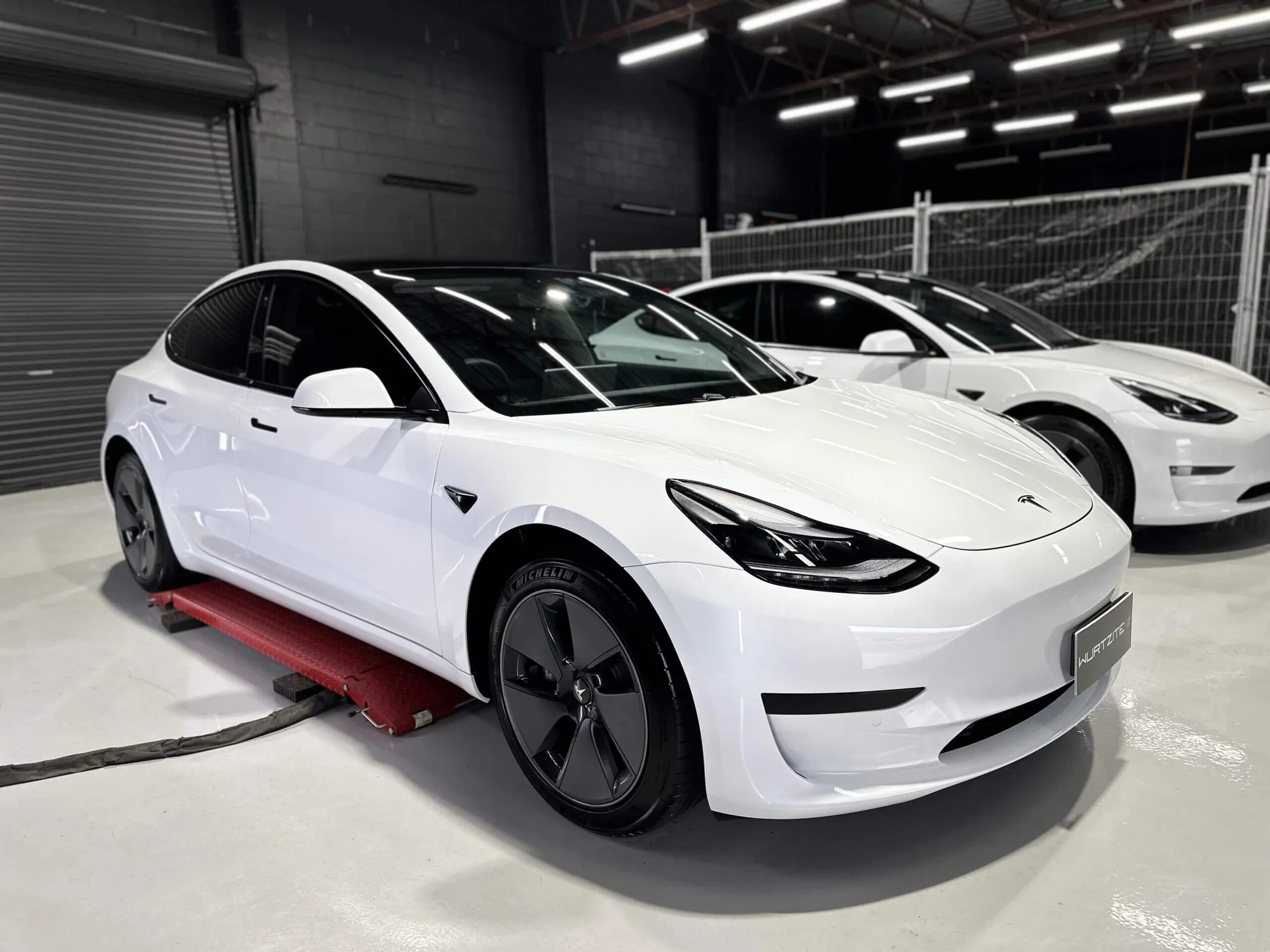
You have sat in a parked car on a summer afternoon and wondered why it feels like an oven. That is a real problem with a real fix, and cracking the windows is not it.
The South Australian legal limits
Start here, because getting it wrong means a defect notice, voided insurance and a tint that has to come straight back off.
VLT is visible light transmission: the percentage of outside light passing through your factory glass and the added film together. A lower number is a darker tint. Do not confuse the film’s own VLT rating with your vehicle’s combined reading. They are different figures.
| Window | Minimum VLT | Notes |
|---|---|---|
| Front side windows | 35% | Driver and passenger. Combined glass and film reading. |
| Rear side windows | 20% | Darker shade permitted for privacy and heat control. |
| Rear windscreen | 20% | Same rules as the rear side windows. |
| Front windscreen | No film | A tint strip is permitted on the top 10% only. |
A certified installer measures your factory glass VLT before recommending a shade. This is one of those jobs where going professional protects your insurance as much as your comfort.
How ceramic film works
If you have lived with cheap dyed tint, you probably think of window film as a shade, like drawing a curtain across the glass. Roughly right, with one problem: dye absorbs heat until it saturates, at which point the glass becomes a radiator pushing warmth back into the cabin. You are still hot, in a darker space.
- 01 Nano-ceramic particles Microscopic, non-metallic and non-conductive particles are embedded across ultra-thin layers inside the film.
- 02 Infrared blocking Those particles selectively block infrared radiation, the wavelength that carries heat, without blocking visible light.
- 03 UV filtration The film filters over 99% of UV, which protects passengers and stops the interior fading and cracking.
- 04 Clarity holds Dyed films haze over time. The ceramic structure lets visible light through cleanly, so night visibility stays good.
The nano-ceramic technology in premium films was originally developed for spacecraft thermal protection during re-entry. An Adelaide summer at 40°C sits well inside its comfort zone.
What Adelaide drivers get out of it
- Quality ceramic film rejects between 50% and 85% of solar heat. On a 35°C day that can mean a 10 to 15°C drop in cabin temperature against standard tint, and an air conditioner working far less hard.
- Over 99% UV rejection, which matters when the local summer index reaches 11 and unprotected skin burns in under 15 minutes.
- No signal interference. Metallic films interfere with GPS, mobile reception and Bluetooth. Ceramic is completely metal-free.
- Ten to fifteen years of service. Dyed film fades, bubbles and turns purple within a few years.
- Dashboards crack and leather fades under sustained UV and heat, so the film is one of the cheaper ways to hold interior condition and resale value.
Dyed, carbon and ceramic compared
| Dyed | Carbon | Ceramic | |
|---|---|---|---|
| Heat rejection | 25 to 35% | 35 to 45% | 50 to 85% |
| UV protection | Around 90 to 95% | Around 99% | Over 99% |
| Lifespan | 5 to 7 years | 7 to 10 years | 10 to 15 years |
| Signal interference | None | None | None |
| Colour stability | Turns purple over time | Good | Excellent |
| Night visibility | Hazy, some distortion | Good | Clear |
| Typical sedan cost | $250 to $350 | $350 to $450 | $450 to $600 |
Dyed film is a budget decision, and it usually needs replacing inside five years, so the saving tends to evaporate. Carbon is a sensible middle ground with good heat rejection, a decent lifespan and no effect on electronics. Ceramic is what we recommend for Adelaide drivers, premium vehicles and anyone covering distance.
The films we fit
Brand matters as much as installation, so we only use professional-grade product: Rayno Phantom series S5 and Solar Gards VTX Pro. Fitting mediocre film defeats the point of upgrading.
VTX Pro sits at the top of the nano-ceramic range. It blocks up to 96% of infrared, delivers total solar energy rejection of up to 63%, blocks over 99% of UV at an SPF rating of 285 or higher, stays completely metal-free, and carries a limited lifetime warranty on product performance and durability.
Carbon ceramic films sit just below that and meaningfully above standard carbon: infrared rejection in the 60 to 70% range, strong UV filtration, good colour stability, electronics-friendly. For drivers who want real protection without going to the top of the range, that is usually where the conversation lands.
What it costs in Adelaide
| Vehicle | Price range |
|---|---|
| Small sedan or hatchback | $400 to $550 |
| SUV or wagon | $500 to $700 |
| Dual cab or 4WD | $450 to $650 |
You will find $200 to $300 tint jobs around Adelaide. Cheaper film delivers a fraction of the heat rejection and needs replacing far sooner. For most drivers the ceramic spend pays for itself through reduced air conditioning load alone, before UV protection and interior preservation come into it.
Why the install matters as much as the film
We see this regularly: someone buys a DIY kit online, spends a weekend fighting with it, and calls a few months later to have it stripped and redone. Poor application means bubbles, lifted edges and inconsistent shade, and it may not meet the SA legal requirement at all.
Budget tint tends to start lifting at the edges within two or three years, or fades to a purple-brown that cannot be fixed, only replaced. A professional ceramic install looks the same in year ten as it did on the day.
Every job here is assessed individually and the film is chosen for the specific vehicle. Call 1300 605 531 for a straight recommendation and a precise price.