

Ozycoat paint protection vs paint protection film in Adelaide
A liquid coating and a physical film do different jobs. Here is where each one earns its place on an Adelaide car, from a workshop that fits one of them and not the other.
· 9 min read
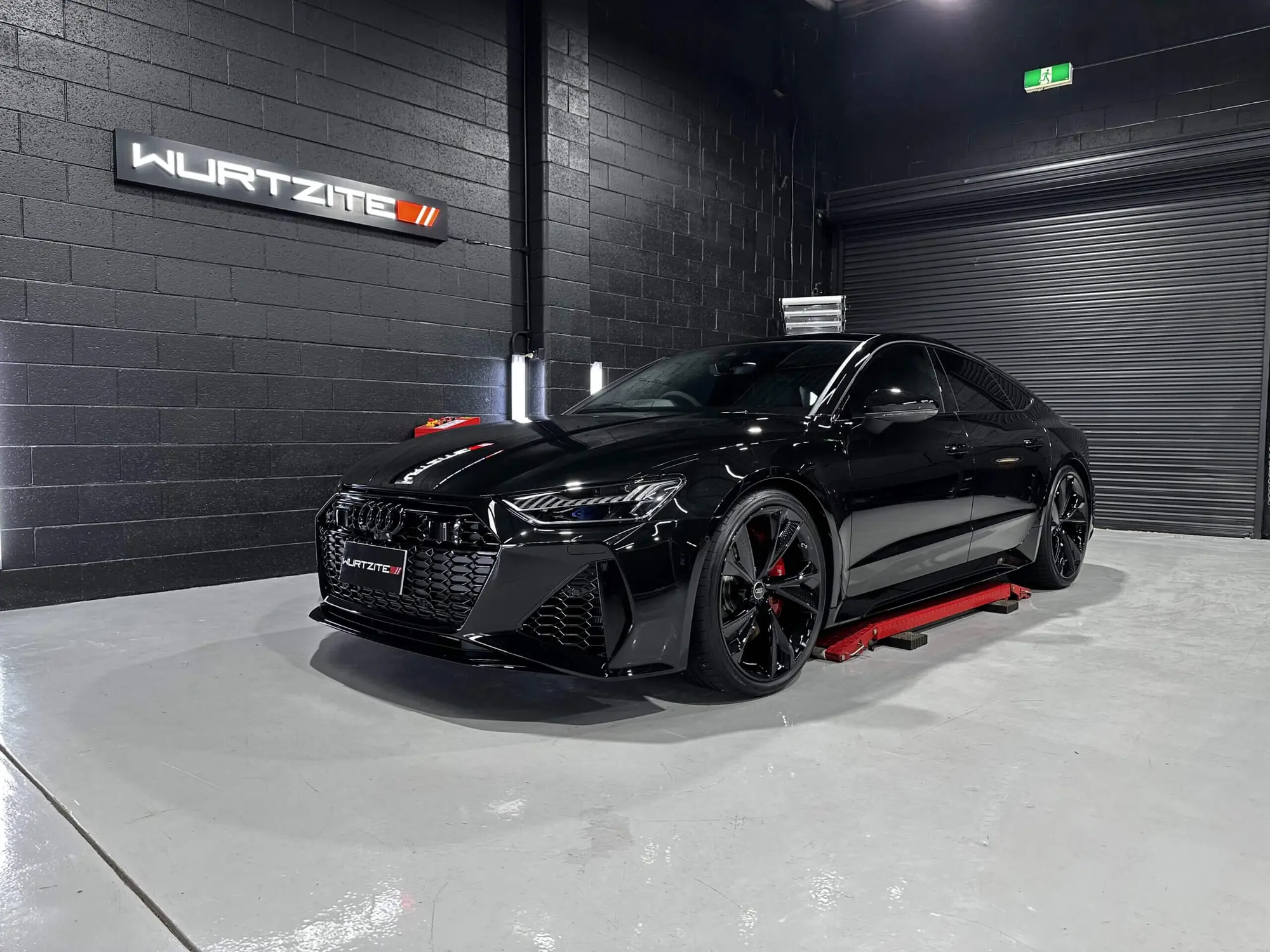
Owners ask us how Ozycoat and paint protection film compare to what we actually do here. This is the answer we give across the counter, written down. Twenty-eight years of putting protection on Adelaide cars has left us with a fairly clear view of where each product earns its money.
A note first, because it changes how you should read the rest. Ceramicar does ceramic coating and paint correction. We do not install paint protection film. That is exactly why this piece can be straight about the jobs film does better than anything we sell.
What Ozycoat actually is
Ozycoat is an Australian-made liquid paint protection that sits between a sealant and a coating. It is applied by hand, bonds to the clear coat and cures into a sacrificial layer over the paint. Most Adelaide owners meet it at the dealer handover desk, bundled into the finance package alongside interior and rust protection.
The finish is genuinely good when the prep underneath has been done. Water beads tightly, road grime rinses off with far less effort, and the paint holds a deeper, wetter look than a bare factory clear coat. On a black Range Rover or a metallic Porsche you see the gloss lift in the sun that same afternoon.
Where it earns its place
- It covers every panel end to end. No wrap lines, no cut points, nothing visible at the edges.
- The hydrophobic layer sheds water, bird droppings and tree sap far better than bare paint, which counts if you park under the gums along Greenhill Road or spend weekends at McLaren Vale.
- Colour depth and reflectivity lift, particularly on dark paint.
- Application is quicker and less invasive than film, and there is nothing physical to peel or replace later.
Where it stops
- It is a chemical layer, not a physical shield. A stone thrown up on the South Eastern Freeway or the North-South Motorway goes straight through it into the paint.
- The result is only ever as good as the surface underneath. Skip the correction and the coating seals in every swirl and hologram the polisher missed, for the life of the product.
- Longevity swings with how the car is washed and stored. An automatic wash with harsh brushes strips it back much faster than owners expect.
For a daily-driven luxury car that lives in a garage and gets washed by hand, it is a sensible entry point into serious paint protection. For anything doing regular freeway kilometres or parked outdoors full time, weigh it against a harder ceramic system before you sign.
What paint protection film is
Paint protection film, the clear bra you hear about in owners forums, is a different animal. Where Ozycoat is a liquid that bonds to the paint, PPF is a physical layer: a clear thermoplastic polyurethane film around 200 microns thick, cut to the shape of each panel and laid over the surface on an adhesive backing.
It has become the default for newer performance and luxury cars. The Cayennes, Urus SUVs, GT-line Audis and G-Wagons that roll into Windsor Gardens. The reason is simple. Film absorbs impact. A stone that would chip bare paint or crack through a ceramic coating gets stopped by the film, and on the leading edge of a bonnet, the front bar, the headlights and the mirrors that difference is worth real money at resale.
The top-layer chemistry is the other drawcard. The elastomeric surface self-heals, so light scratches, wash marks and fine swirls close up on their own once the panel warms in summer sun, or with a jug of hot water in July. The film resets its own finish.
- It is the strongest impact protection available, and the most expensive per panel. A full-body wrap is a considered spend.
- Installation quality varies enormously. Bad cuts, lifted edges and dust trapped under the film all show, and fixing any of it means peeling and starting again.
- Film and ceramic are rarely an either-or. The stronger build for a high-value car is film on the impact zones with a ceramic layer over the top of the film and the untreated panels both.
- Quality film from the major manufacturers carries a 10-year warranty against yellowing, cracking and delamination.
A stone travelling at 110 km/h does not care what liquid is on your bonnet. Only film stops that.
Ozycoat, film and ceramic side by side
| Liquid protection (Ozycoat) | Paint protection film | Ceramic coating (Wurtzite P85) | |
|---|---|---|---|
| Stone chip protection | Superficial | Maximum physical barrier | Chemical protection only |
| Scratch resistance | Light swirl protection | Self-healing, deep scratches close up | Prevents wash swirls |
| Heat and UV defence | Good | Excellent, non-yellowing TPU | Maximum chemical and heat shield |
| Self-cleaning | High | Good | Superior water and dirt repellency |
| Typical coverage | Full body | Front bar, bonnet, guards or full car | Entire bodywork and glass |
| Service life | 2 to 5 years | 7 to 10 years and beyond | Multi-year durability |
Which one does your car actually need?
It comes down to where the car spends its time. A weekend GT living in a Norwood garage has a completely different threat profile to a Range Rover that runs up to the Barossa every second weekend.
Freeway and country kilometres
Wear on a car heading through the Adelaide Hills, out to the Clare Valley or south along the Fleurieu is impact wear. Loose gravel on the shoulder, bitumen thrown up by trucks, sharp stones flicked out by the car in front, all of it hitting the front end at speed. No liquid coating stops a pebble at 110 km/h. Ozycoat will not, ceramic will not, wax certainly will not. Film across the front bar, bonnet leading edge, headlights, mirrors and A-pillars is the single most valuable thing you can put on that car.
Commuting and street parking
Here the threats are chemical and thermal. Bird strike from the plane trees in the East End, sap from the gums in North Adelaide, hard water spots off a neighbour’s sprinkler, and a UV load that quietly oxidises unprotected clear coat over years. A nanoceramic coating handles this profile well. Wurtzite P85 is what we run. It bonds to the clear coat, rejects UV, and stops bug acid and bird droppings etching in before you get to the car with a wash mitt.
Both, on the same car
- 01 Film first Laid over the high-impact panels: front bar, bonnet, guards, mirrors, headlights, and often the rocker panels and rear arches on lower cars.
- 02 Ceramic second Applied over the whole vehicle, including over the film itself, so the gloss and the easy wash carry across every panel.
On a new Cayenne, an Urus, a G-Wagon or a 992-generation 911 that is the build we most often recommend to owners planning to keep the car five years or longer.
Why the preparation decides the result
This is the part owners underestimate. Ozycoat, ceramic, a full PPF wrap: the finish you end up with is decided by what happened to the paint before the product went on. Applied over swirls, holograms, industrial fallout, water spots or the orange peel most factory finishes carry, any of these products seals those defects in permanently. You will see them every time the sun hits the panel, and the only way out is to strip the coating or peel the film and start again.
So we will not apply long-term protection without a correction stage first. Decontamination, a machine polish calibrated to that paint, and a bare surface ready to bond. It adds hours to the job. It is also the whole difference between a coating that looks right for years and one that locks in somebody else’s mistakes.
Every vehicle at Windsor Gardens goes through multi-stage decontamination and correction before protection. MTA and RAA approved, Wurtzite P85 certified, 28 years of auto rejuvenation behind the bench. Book a free assessment on 1300 605 531 and we will tell you which of these three your car needs, including when the answer is one we do not sell.
Still deciding
Questions we get asked
3 answers · Windsor Gardens workshop
Yes, and on a high-value car it is the setup we most often recommend. Ceramic over the top of film gives you both layers doing their own job: the film absorbs stone impacts and abrasion, the ceramic adds slickness and hydrophobicity and stops road grime building along the film edges. The car washes easier, holds gloss longer, and the film underneath lasts.